
Air sealing services in Hanahan SC - a house that holds the cool air you pay for
Hot rooms upstairs, drafts at the attic hatch and a power bill that keeps climbing? We find the hidden leaks and seal them.
- Service
- Air sealing services
- Call
- (843) 278-0353
How can you tell your house is leaking air?
Upstairs rooms run hot
The AC runs all afternoon and the bedrooms upstairs still feel stuffy, or the room over the garage never catches up. That usually means attic air is pulling in through gaps in the ceiling, and every summer it goes on, you're paying to cool air that slips right back out.
Drafts by outlets and the hatch
You feel moving air at the attic hatch, around a can light or at outlets on outside walls. Those are the leaks you can find, and there are usually more behind them, so the longer they stay open the harder your insulation has to fight a draft.
Dark streaks in the insulation
When you look in the attic, some of the insulation has gray or black patches, often around pipes, wires or the top of an inside wall. That's dust left behind by air moving through it, and piling more insulation on top without sealing just buries the leak.
What does air sealing do for a house in Hanahan?
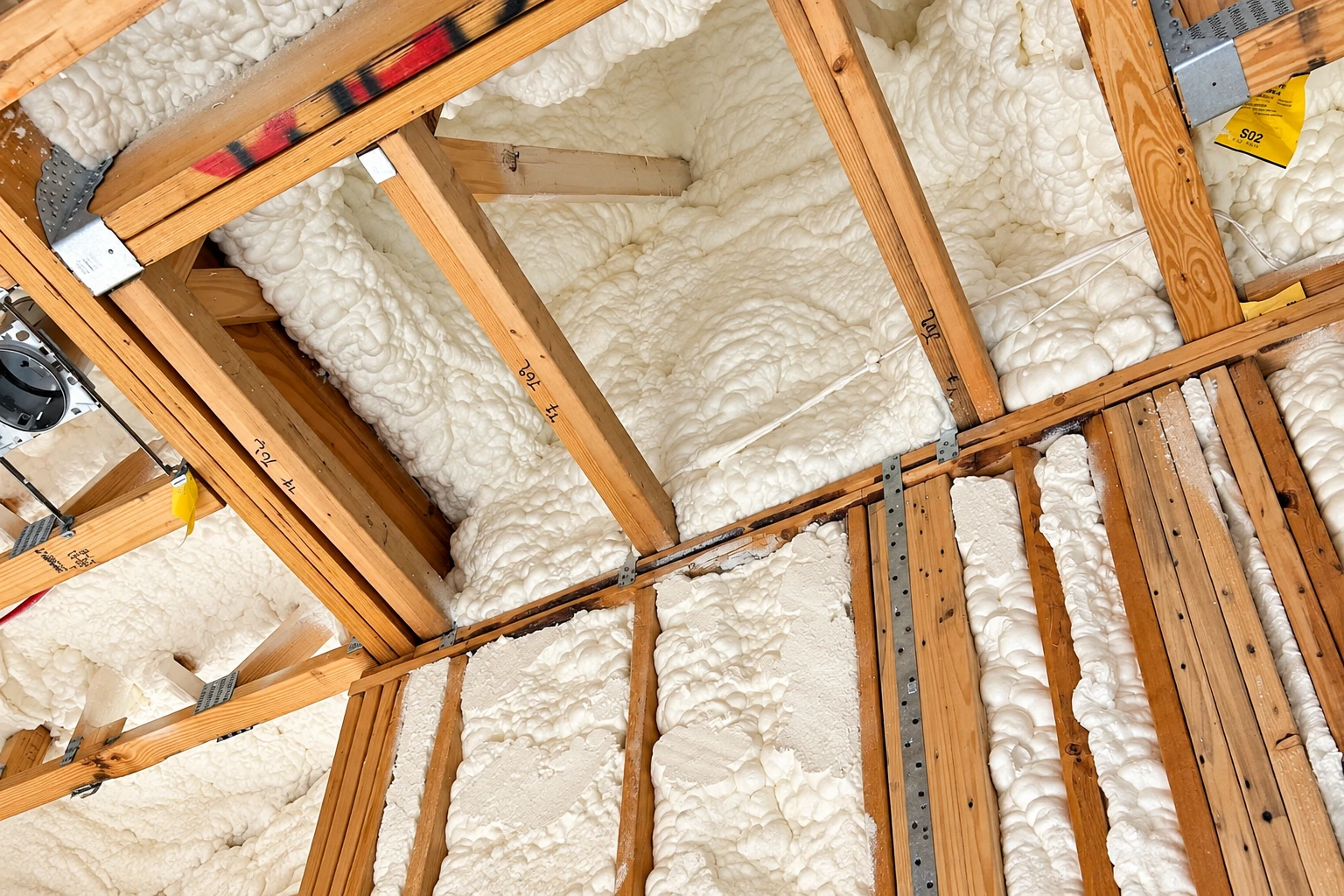
Air sealing services in Hanahan close the gaps, cracks and holes between your living space and the parts of the house you don't heat or cool, like the attic and crawl space, so the air you pay to cool stays inside and attic air stays out. The leaks run around light fixtures, ducts, wiring, plumbing pipes and flues, and most of them hide where you'd never think to look.
Most people call us with a hot upstairs, a drafty room or a power bill that keeps creeping up, and they've usually already weatherstripped a door or two. What moves the price is how many openings there are in the attic floor, how much old insulation we have to pull back to reach them and whether the crawl space or the room over the garage needs the same work. The schedule turns on whether soaked or dirty insulation has to come out first and whether a gas appliance needs a check before we seal, and your written estimate spells out what we'd fix first and why. If the attic needs more than sealing, the same visit covers attic insulation too.
Details to note before an estimate
- Rough age of the house
- Gas water heater, furnace or stove
- Inches of insulation already up there
- Rooms that run hot or drafty
How we handle air sealing in your house
I start by looking, because the leaks that matter most are usually the ones buried under old insulation where you'd never spot them from the hatch. We pull that insulation back and work along the top of every inside wall, around can lights, wiring holes, plumbing stacks, the spots where ducts come through the ceiling and the flue, then the hatch itself. Narrow gaps get caulk or spray foam, and bigger openings get a piece of rigid board sealed in place, since loose insulation slows heat but lets air straight through. If you have gas appliances, we make sure they get checked before we tighten up the house, and once the sealing's done we lay the insulation back level all the way to the edges and keep it clear of the eave vents so the attic can still breathe.
Sometimes the worst leaks aren't in the attic at all. The rim where a house sits on its foundation is a common one, and we often seal it as part of basement insulation. When the ductwork runs through the attic, I'll usually point you to closed-cell foam insulation, a dense foam that seals air while it insulates, because it costs more but keeps those ducts inside the sealed part of the house. Without ducts up there, sealing the gaps and topping up loose fill is usually the better buy.
Other work that often goes with air sealing
Basement insulation
A basement's rim and walls can leak air too, and insulating them keeps that lower floor from feeling cold and damp all year.
Closed-cell foam insulation
Dense foam stops air and blocks moisture in a single layer, which suits attics with ductwork, the room over the garage and damp spots.
What happens after you call us about air sealing?
Call or send a request
Call (843) 278-0353 or fill out the form, and we'll find a time that suits you. I'm the one who comes out to look and write the estimate.
Look at the house together
I go through the attic, crawl space or walls with you and show you what I find. I'd rather you see it than take my word for it.
Go over the written estimate
You get a written estimate that says what we'd fix first, what comes after and why, so you know what each part of the price is paying for. We go over your questions until the plan makes sense to you.
Seal it and walk through
On the day of the job we protect your home, and our installers do the work in that order, usually with me right there alongside them. Before we leave, we walk you through the finished space.
Common questions about air sealing a house
How much does air sealing cost in Hanahan, SC?
Air sealing with caulk, spray foam and weatherstripping usually runs about $500 to $1,500 per job across the US, and that's a national figure, not our price. Where your house lands depends on how many openings there are, how much old insulation sits over them and whether any of it has to come out first. The estimate gives you the figure for your own house.
Can I get help paying for air sealing in Hanahan?
You may, if you buy your electricity from Dominion Energy South Carolina. Its home energy program is open to the utility's residential electric customers, owners and renters alike, and eligible Home Energy Check-up Plus participants may receive help toward qualifying attic insulation, air sealing and duct sealing, up to $2,880. The offer runs through March 31, 2027, so if you qualify, it's worth planning the work before then.
How do I find air leaks in my attic myself?
You can find the obvious ones, like a draft at the hatch or daylight around a pipe, but a do-it-yourself search usually misses the small leaks, especially in an older attic where layers of insulation cover them. In an existing house, the leaks that matter most are often the ones an owner is least likely to find alone. That's the part of the job most worth paying someone for.
Is air sealing safe if my house has gas appliances?
It is, when the appliances get checked first. Federal guidance calls for a combustion safety test in homes with fuel-burning appliances that vent on their own draft up a flue, like many older water heaters and furnaces, to make sure fumes aren't spilling back into the house, and any problem gets fixed before sealing goes ahead. A tighter house can also need a fan system that brings in outdoor air, and we'll tell you if yours looks like it does.
What is the best way to choose an air sealing contractor?
Ask how they'll measure the result and what training they hold. Federal guidance calls for a blower door test, a fan test that shows how airtight the house is, before work starts, with a target set from it so the job has a clear goal, and the Department of Energy names two certifications, the Building Performance Institute Building Analyst and the RESNET HERS Rater, that you can ask about when comparing bids. We're fully licensed and insured, and our work is satisfaction guaranteed.
Should air sealing be done before adding attic insulation?
Yes. When an existing vented attic gets new insulation, the guidance is to seal every opening through the attic floor first, because insulation laid over open gaps just ends up fighting a draft. It's also a lot easier to seal while the attic floor is in reach than to dig through a fresh layer later.
Get a written air sealing plan for your house
We reply within one business day to set a time for me to come out and look at your attic, crawl space or walls with you. The estimate is free and done at your house, with no pressure and no obligation.
Explore our services and areas
Services
- Spray foam insulation
- Attic insulation
- Blown-in insulation
- Home insulation
- Insulation removal
- Crawl space insulation
- Wall insulation
- Basement insulation
- Closed-cell foam insulation
- Open-cell foam insulation
- Commercial insulation
- Crawl space vapor barrier
- Vapor barrier installation
- Attic air sealing
- Retrofit insulation
Set up your air sealing visit
Have your home's age, any gas appliances and your electric provider in mind when you call (843) 278-0353, so I can plan the visit around your house.