
Open-cell foam insulation in Hanahan SC - an attic that stops leaking air
Hot rooms upstairs and a power bill that keeps climbing? We spray foam under your roof so the attic stops leaking air into the house.
- Service
- Open-cell foam insulation
- Call
- (843) 278-0353
How can you tell your attic is letting you down?
Upstairs never cools down
You turn the thermostat down and the bedrooms still run hot by late afternoon. That usually means heat is building in the attic and slipping into the house through gaps in the ceiling, and every month you wait the AC runs longer to keep up.
Drafts around lights and hatches
You can feel air moving around can lights, the attic hatch or the pipes that run up through the ceiling. Those gaps let attic air pour straight into your rooms, so even a deep layer of insulation ends up fighting a draft it can't stop.
The room over the garage
One room is always the worst, too hot in summer and too cold in winter, and it's usually the one over the garage. That room tends to have thin insulation and open gaps on several sides, and left alone it stays a room nobody wants to use.
Is open-cell spray foam right for your Hanahan attic?
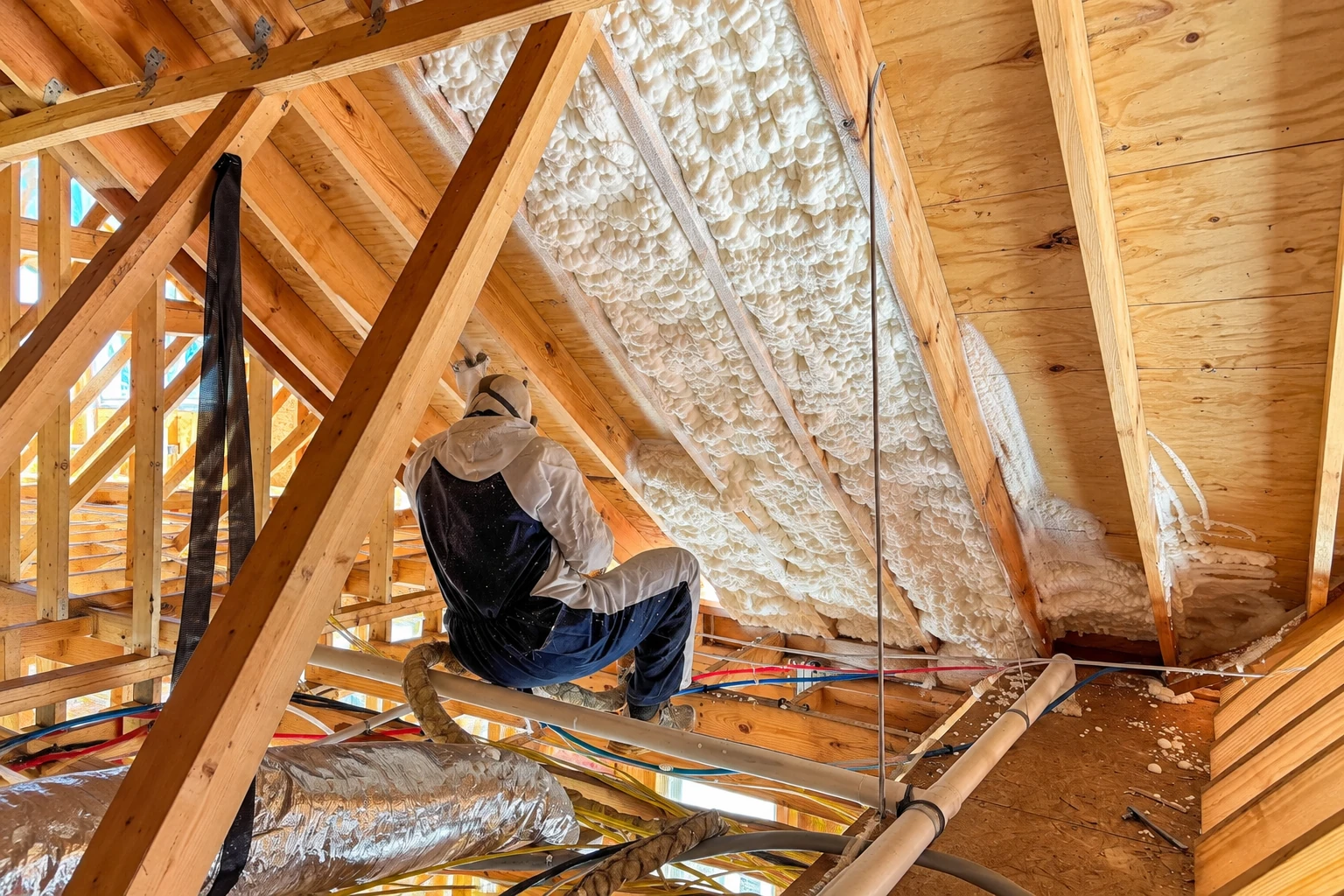
Open-cell foam insulation in Hanahan, SC is sprayed in place, usually on the underside of the roof deck, the boards under your shingles, where it insulates and seals air leaks in one step. At Essential Hanahan Spray Foam Insulation, we use it to turn a hot, leaky attic into a sealed space that's treated as part of your house.
Most foam calls I get start with a hot upstairs or a power bill that won't come down, and the first things I want to know are what's already in your attic, how many inches of it there are and where your ductwork runs. The price moves with the size of the roofline, how thick we spray, how much old material has to come out first through insulation removal and how easy the attic is to reach, and the schedule turns on that prep plus the time your family needs to be out of the house while the foam sets. The written estimate puts your own numbers on paper, along with what we'd do first and why.
Details to note before an estimate
- Rough square footage of the attic
- Inches of old insulation already up there
- Where the ductwork and air handler sit
- Any history of roof leaks
- Rooms that run hot or drafty
- Age of the house
How we install open-cell spray foam
Before anyone sprays, I'll tell you straight whether open-cell is enough for your house or whether closed-cell foam, the dense kind that also blocks moisture, fits better, and if sealing the gaps and topping up loose fill would do the job for less, I'll say that too, because foam costs more and usually earns it when your ductwork lives in the attic. On the day, we cover your floors and the path to the attic, pull out any old insulation that's been soaked or fouled by droppings so we aren't burying the problem, look over the roof deck for signs of leaks, and then spray evenly out to the edges, where attics most often come up short. I'll also give you the wait time for the exact product we're using before the job is booked, so you can plan where to stay, and I'm usually right there with our installers while they work.
The attic is only one end of the house. If the floors feel cold or the space under the house smells damp, a crawl space vapor barrier keeps ground moisture out of the framing, and for small business owners we handle commercial insulation with the same walk-through first.
Other work that often goes with it
Commercial insulation
Own a shop, office or small warehouse? We insulate business buildings too, starting with a walk-through so you know exactly what you're paying for.
Crawl space vapor barrier
When the floors feel cold or the crawl space smells damp, a sealed ground cover keeps moisture from soaking into the floor framing above it.
What happens after you call us about spray foam?
Call or send a request
Call (843) 278-0353 or use the form, and we'll set up a time for me to come out. We pick up seven days a week, early morning to evening.
Look at the attic together
I come out myself, go up in the attic with you and show you what I find, from old insulation to gaps around the hatch. You get a written estimate with your price that says what we'd fix first, what comes after and why, and we go over it until the plan makes sense.
We do the work in order
On the day, we protect your home and do the work in the order the estimate lays out. You and your pets stay out while we spray and for the wait time I gave you for that product.
Walk the finished attic
Before we leave, we walk you through the finished space so you can see the coverage at the edges as well as the middle. Satisfaction guaranteed.
Questions before you book open-cell foam
How much does spray foam insulation cost around Charleston?
Spray foam insulation in the Charleston area usually costs about $1 to $5 per square foot, and that range covers spray foam in general. Where your attic lands depends on the type of foam, how thick it goes on, how much old material comes out first and how hard the attic is to get into. The estimate I write after looking at your attic gives you your own figure.
Is open-cell or closed-cell spray foam better for my attic?
It comes down to whether your attic needs the foam itself to hold back water vapor, because open-cell blocks air but lets vapor pass through, while closed-cell can act as the moisture barrier. Open-cell typically runs about R-3.6 per inch, R-value being how well it slows heat, so the thickness we spray sets how much insulation you get. I'll tell you which one your house calls for and why.
How long do we have to stay out of the house after spray foam?
Plan to be out of the work area before spraying starts and to stay away for a while afterward. Some foam makers recommend about 24 hours before people come back, though the wait can vary from one product to the next. I'll tell you the wait for the foam we're using when we book, so you can line up a place for the kids and pets.
What is the best way to handle moisture in a sealed attic with spray foam?
A sealed attic needs a way to remove moisture, so that gets planned alongside the foam, not after it. The main risks with foam under a roof deck are rainwater from roof leaks, condensation from vapor and air leaks, and moisture left behind from construction. That's why I ask about your roof's leak history and look over the deck before we spray.
Does an insulation contractor need a license in South Carolina?
South Carolina's residential specialty contractor rules list insulation installer as its own trade, and a residential specialty contractor is someone a homeowner hires for skilled work on a job over $500. That trade covers foam used as insulation, while foam sprayed on a roof as the roofing itself falls outside it, so that's a different hire. We're fully licensed and insured, based in Hanahan in Berkeley County, and work across Charleston, North Charleston, Mount Pleasant, Summerville, Moncks Corner and other nearby cities.
How do I know if the spray foam in my attic needs a fire barrier?
Ask your installer, because it depends on the foam and the code. Some spray foams need a thermal or ignition barrier over them, such as a coating or drywall, and others need none. I'll tell you whether the product we're using needs one when we go over your estimate.
Get a written open-cell foam plan for your attic
We reply within one business day. Estimates are free and done in person at your home, with no pressure and no obligation. After you send this, we'll set a time for me to look at your attic with you, and then you get a written estimate that lays out what we'd do first, what comes after and why.
Explore our services and areas
Services
- Spray foam insulation
- Attic insulation
- Blown-in insulation
- Home insulation
- Insulation removal
- Crawl space insulation
- Wall insulation
- Air sealing services
- Basement insulation
- Closed-cell foam insulation
- Commercial insulation
- Crawl space vapor barrier
- Vapor barrier installation
- Attic air sealing
- Retrofit insulation
Book an attic visit for open-cell foam
Call (843) 278-0353 or send the form with your attic's rough square footage and any roof leak history, so the first visit gets right to your house.