
Wall insulation in Hanahan SC - rooms that stay comfortable right up to the outside wall
If a room runs drafty and its outside walls feel cold in winter or warm in summer, we fill them so it holds steady.
- Service
- Wall insulation
- Call
- (843) 278-0353
How can you tell your walls need insulation?
One room never feels right
It's usually the room with the most outside wall, like the one over the garage or on the end of the house, and it runs hotter or colder than the rest no matter where the thermostat sits. Most of the time the walls around it are thin or empty, so until they're filled you keep paying to heat and cool air that goes right back outside.
Outside walls feel cold
Put a hand on an outside wall on a winter morning, then on an inside wall, and you'll notice if the outside one is a lot colder. That usually means the space behind the drywall has little in it or the old fill has settled toward the bottom, and the longer it stays that way, the harder your system works to keep up.
Drafts at outlets and baseboards
You feel air moving around outlets, switch plates or baseboards on the outside walls, especially on a windy day. That's outside air coming through the wall, and that kind of leak keeps the power bill up all year until the wall is filled and the gaps are dealt with.
Can you insulate the walls of a house that's already built?
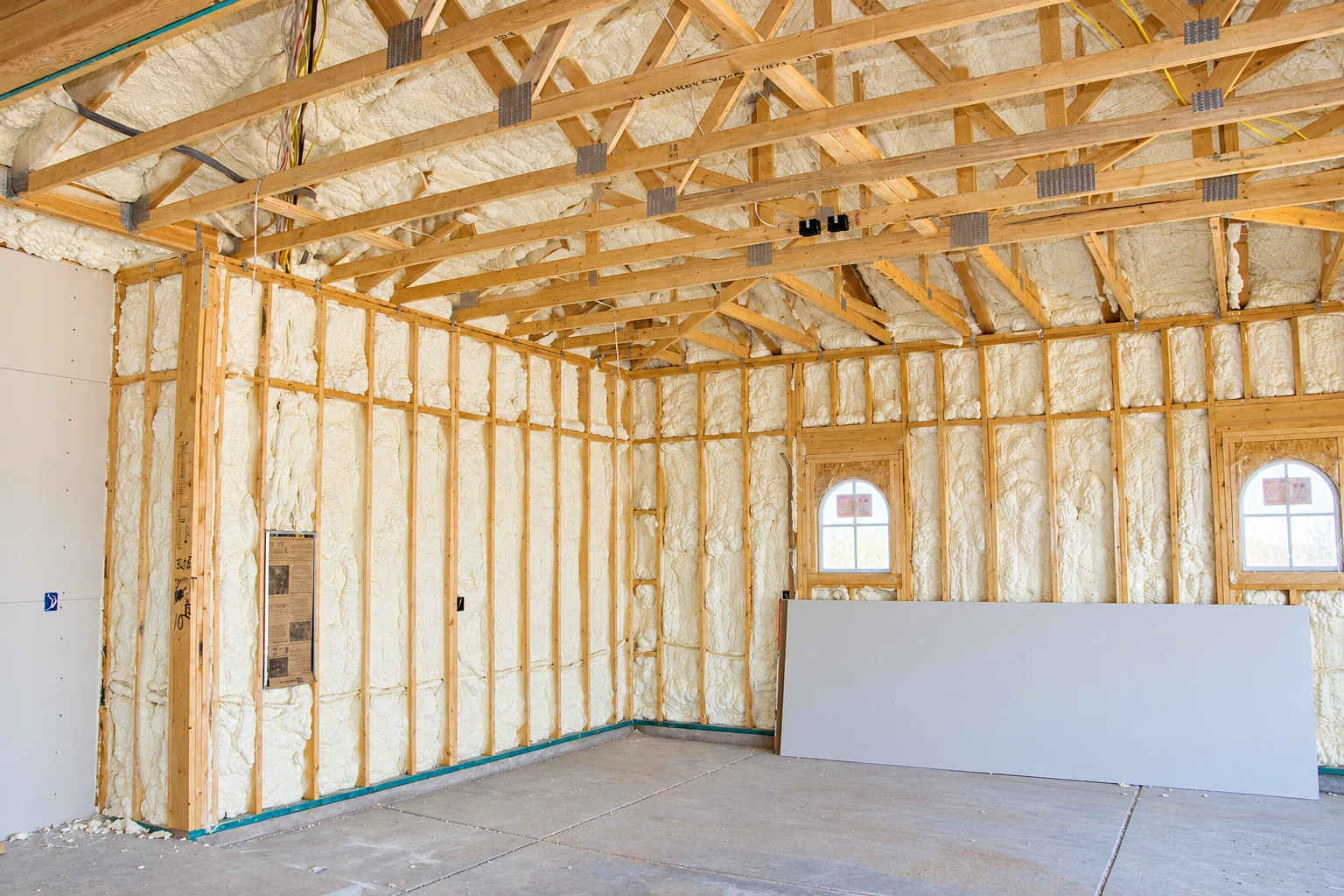
Essential Hanahan Spray Foam Insulation does wall insulation in Hanahan, SC for houses that are already standing. We drill small holes near the top of each outside wall cavity, from inside or outside, and fill the cavities with blown-in insulation, which is loose fill blown in through a hose. We're based in Hanahan and work across Charleston, North Charleston, Mount Pleasant, Summerville, Moncks Corner and the other cities around it.
Most wall calls start with one room that never feels right, and the walls around it turn out to be thin or empty. The price mostly comes down to how much wall we're filling, whether we work from inside or outside, how much patching or siding work that brings, and whether an older house needs extra care before we drill. Timing turns on the same things, plus any siding job you have coming, since that changes how we'd plan the walls. If the attic is part of the problem too, we can look at attic insulation on the same visit, and my written estimate lays it all out in the order we'd do it.
Details to note before an estimate
- Year the house was built
- Which outside walls or rooms to fill
- Siding type and any re-siding plans
- Damp spots or stains on outside walls
How we handle wall insulation in an existing house
Before we drill a single hole, I check how old the house is and what wiring runs through the walls, because both change how the job can be done safely. Then we go over with you whether to fill the walls from inside or outside, and once that's settled our crew covers what needs covering, floors and furniture inside or shrubs and beds along the house outside. We drill small holes near the top of each wall cavity, the space between two studs, blow the insulation in until the cavity is full, then plug and patch the holes and put back any siding we took off.
Walls are only part of how a house loses heat and cool air, so we look at the rest while we're there. Where the drafts come from gaps the wall fill can't reach, we pair the job with air sealing services, and where the cold comes up through the floor, basement insulation is usually the next thing I'd look at. If either one isn't worth the money in your house, I'll tell you so.
Work that often goes with wall insulation
Air sealing services
When the draft comes from cracks and openings the walls don't reach, sealing those first does more for comfort than extra fill would.
Basement insulation
If cold floors or a chilly basement are part of the problem, insulating down there helps the rooms above hold what the walls now keep in.
What happens after you call about wall insulation in Hanahan?
Call or send a request
You call (843) 278-0353 or send the form, and we set a time for me to come out to your house. I'm the one who looks at the job and writes the estimate, so you're dealing with the same person from the start.
Walk the walls with me
I look at your outside walls with you, inside and out, and show you what I find. If something underneath needs dealing with first, you'll see it with your own eyes before we talk about filling anything.
Go over the written estimate
You get a written estimate that says what we'd fix first, what comes after and why, so you can see what you're paying for. We go over it together, as many times as it takes, until the plan makes sense to you.
Do the work, then walk through
Our installers do the work in the order the estimate lays out, and I'm usually right there with them. Before we leave, we walk you through the finished rooms, and the work is satisfaction guaranteed.
Questions before you insulate your walls
How much does blown-in wall insulation cost in Hanahan?
Across the US, installing blown-in wall insulation usually costs about $4 to $4.50 per square foot of wall. That's a national figure, not our price, and what your house comes to depends on how much wall we fill, which side we work from and how much patching or older-home care the job needs. I'll put your number in writing after I've looked at the walls.
Can wall insulation go in from inside instead of outside?
Yes, insulation can go in from inside, and sometimes that's the better way. Blowing it in from outside cuts through the water-shedding layer behind your siding, such as house wrap, so that layer then has to be patched or replaced, while working from inside leaves it alone. Which way fits your house depends on how easy each side is to get at and what shape that layer is in, and I'll tell you which I'd pick once I've seen both.
What is the best time to insulate the outside walls of a house?
The best time is when you're replacing the siding, because with it off the crew can check the house wrap or put new wrap on. It's also the chance to add rigid foam board, stiff foam panels fastened to the outside of the wall, along with filling the cavities or instead of it. Foam on the outside slows how the wall dries outward, so the wall needs a way to dry toward the inside, and we look for damp problems in the wall before anything new goes on.
Will filling my walls stop all the drafts in my house?
No, filling the walls usually cuts down drafts, but it won't stop all of them. Dense-packed cellulose, loose fiber packed tight into each cavity, can seal a good deal of air leakage, but it only reaches the spaces between the studs. Leaks at the rim joist, the band of framing where the house sits on its foundation, between floors and where the walls meet the roof need their own work, which is why we often pair the two.
Does an older home need special care before insulating the walls?
Yes, an older home usually needs a closer look first. On houses built before 1980, lead safety rules can apply depending on how much of the wall gets disturbed, and the National Electrical Code doesn't allow insulation applied to or around knob-and-tube wiring, the old wiring strung on porcelain knobs. So the age of your house and what runs through its walls shape the whole plan, and a wall with knob-and-tube in it doesn't get filled while that wiring is there.
How do I know if a wall insulation contractor in South Carolina is licensed and bonded?
Ask them before you sign anything, because South Carolina requires a current license or registration to do residential building or specialty contracting in the state. A residential specialty contractor also has to get a surety bond when materials and labor on your job run over five thousand dollars, so on a larger job ask about that too. We're fully licensed and insured, and I'm glad to go over any of it at the estimate.
Get a written plan for insulating your walls
We reply within one business day to set a time for me to come out. The estimate is free and done at your house, with no pressure and no obligation, and afterward you get it in writing with what we'd do first and why.
Explore our services and areas
Services
- Spray foam insulation
- Attic insulation
- Blown-in insulation
- Home insulation
- Insulation removal
- Crawl space insulation
- Air sealing services
- Basement insulation
- Closed-cell foam insulation
- Open-cell foam insulation
- Commercial insulation
- Crawl space vapor barrier
- Vapor barrier installation
- Attic air sealing
- Retrofit insulation
Ask your wall insulation questions in person
Call (843) 278-0353 or use the form, and bring every question you've got, because I'd rather sketch the job out twice than have you guess at what you're paying for.